
Which CIIF Theme Shows Match Your Manufacturing Needs? A Guide for 2027
2026-11-06
China International Industry Fair (CIIF) is a comprehensive industrial exhibition in Shanghai, China. Choose its specialist theme shows by the manufacturing decision your team needs to make. Energy supply and storage questions point toward the Energy Show (ES); equipment operation and retrofit needs toward the Green Low-Carbon Show (GLCS). Material selection and processing requirements point toward the New Material Industry Show (NMIS). Teams investigating transportation applications and component supply can start with the Future Transportation Industry Show (FTIS).
Our specialist shows give manufacturing managers, engineering and procurement teams, energy specialists and R&D colleagues different starting points for investigating a project. Equipment, automation, robotics and industrial information sit alongside energy, materials, mobility, university research displays and the integrated-circuit ecosystem. The same product-development or factory-improvement project may connect several themes, but each should contribute a distinct question to the discussion.
CIIF 2027 is scheduled for September 20–24 at the National Exhibition and Convention Center (Shanghai). This guide uses the ten theme shows documented for CIIF 2026 to explain their established areas of coverage. It is a starting point for 2027 research; the next edition’s specific theme-show arrangements, exhibitors, hall locations and activities must follow its own published materials.
The CIIF theme shows at a glance
The table connects all ten specialist fields documented for 2026 with the teams and questions they can help inform. Use it to identify an initial focus, then explore related themes where your project crosses disciplines. The official theme-show overview provides the exhibition context; the team roles and research questions below are practical planning suggestions.
| Theme show | Main field | Relevant teams | A question to investigate |
|---|---|---|---|
| Metalworking and CNC Machine Tool Show (MWCS) | Metalworking processes, machine tools and supporting equipment | Production engineering, machining and equipment procurement | Which process and equipment choices fit the parts we need to make? |
| Industrial Automation Show (IAS) | Industrial automation products and system solutions | Controls, plant engineering and system integration | How should equipment and process operations be coordinated? |
| Robotics Show (RS) | Robot technologies and industrial and service applications | Automation engineering and application development | Where does a robotic task fit within our intended application? |
| Energy Show (ES) | Clean and new energy, energy systems and integrated energy services | Energy planning, utilities and facilities teams | Which supply, storage or energy-system options address our demand? |
| Advanced Intelligent Manufacturing Show (AIMS) | Industrial internet, software, industrial AI and manufacturing information | Digital manufacturing, IT and operational technology teams | Which information or software capability would support our production decisions? |
| Future Transportation Industry Show (FTIS) | Intelligent connected vehicles, low-altitude mobility, new energy and related components | Transportation product development and manufacturing strategy | What does a mobility application require from its industrial suppliers? |
| Green Low-Carbon Show (GLCS) | Industrial equipment lifecycle management and low-carbon factories and parks | Plant operations, maintenance, retrofit and sustainability teams | Where could changes to operation or equipment improve industrial energy use? |
| New Material Industry Show (NMIS) | Materials connected with industrial applications and processing | Materials engineering, product design and supplier development | Which material and processing requirements determine our product options? |
| Scientific & Technological Innovation Show (STIS) | Primarily university research and technological achievements | University teams and visitors interested in academic research | Which university research fields and achievements are represented? |
| IC Ecosystem Show (ICES) | The integrated-circuit ecosystem and its industrial connections | Industrial strategy and electronics-related development teams | How does the semiconductor ecosystem relate to our manufacturing application? |
These are specialist themes within the same China International Industry Fair. For the relationship between the event name, theme shows, forums and awards, see What Is CIIF?
ES or GLCS: which fits your energy project?
ES and GLCS both relate to industrial energy, but they offer different starting questions. ES is especially relevant when a team is considering how energy is supplied, stored or coordinated. GLCS is especially relevant when the question concerns the equipment and operations that use that energy, including maintenance, retrofitting and upgrades.
Start with ES when the energy system is the main decision
The Energy Show’s documented coverage includes clean energy, new energy and green intelligent systems. Within that scope are wind, solar, storage, hydrogen, smart grids and integrated energy services. An energy-planning team can use this breadth to investigate the relationship between demand and the system serving it.
Consider a factory planning additional production capacity. Before comparing energy technologies, the team needs to understand the demand associated with that expansion: when it occurs, how it varies and what continuity of supply the process needs. Those questions help distinguish an interest in energy supply or storage from an equipment-operating issue. ES is a logical research starting point when the proposed change concerns that wider energy system.
A useful question for an ES discussion is: which part of the energy system would the proposed solution change, and what demand assumptions does it depend on? This helps the team establish whether it is exploring supply, storage or coordination before assessing individual proposals. Procurement colleagues can then understand what system responsibility a potential supplier would take on.
Start with GLCS when the operating asset is the main decision
GLCS’s documented emphasis is on low-carbon industrial development through the management of energy-using equipment over its lifecycle. Its scope connects equipment management, operation, maintenance and upgrading with zero-carbon factory and industrial-park objectives. Those objectives provide context for investigating practical changes to existing industrial assets.
For an existing plant, the question may be whether an operating practice, maintenance need or equipment replacement should be investigated first. A production team concerned about energy use during idle periods has a different starting point from a team considering a new supply arrangement. GLCS helps frame the former discussion around the asset and how it is used. That distinction can guide which colleagues should join the research: operations and maintenance may need to contribute alongside energy and procurement specialists.
Here, a useful question is: what would change in the equipment’s operation, maintenance or configuration, and what would implementation require from the plant? A proposed retrofit may bring different maintenance responsibilities or require an interruption to production. These considerations explain why a team with an existing-asset problem may prioritise GLCS even when its broader objective is to reduce energy use.
Follow the connection when the project spans both
The boundary is not absolute. A plant considering a change in its energy supply may also need to understand whether existing equipment can use that supply effectively. An equipment retrofit may alter the demand that the energy system must serve. Such a project gives a team a reason to investigate both ES and GLCS, carrying the same operating assumptions between discussions.
For example, a factory expansion could begin with ES to explore supply and storage questions, then turn to GLCS to examine equipment operation within the expanded plant. An existing-site improvement project could follow the opposite sequence. These are planning examples, not reported CIIF projects. Neither a show’s low-carbon positioning nor an energy-saving proposal establishes a particular plant’s savings or emissions outcome.
NMIS for material selection and manufacturing requirements
NMIS is a useful starting point when the next decision concerns a material and the work needed to turn it into an industrial product. A team may be comparing grades, investigating a processing constraint or seeking a supplier for a defined requirement. Clarifying that decision makes the materials discussion more specific.
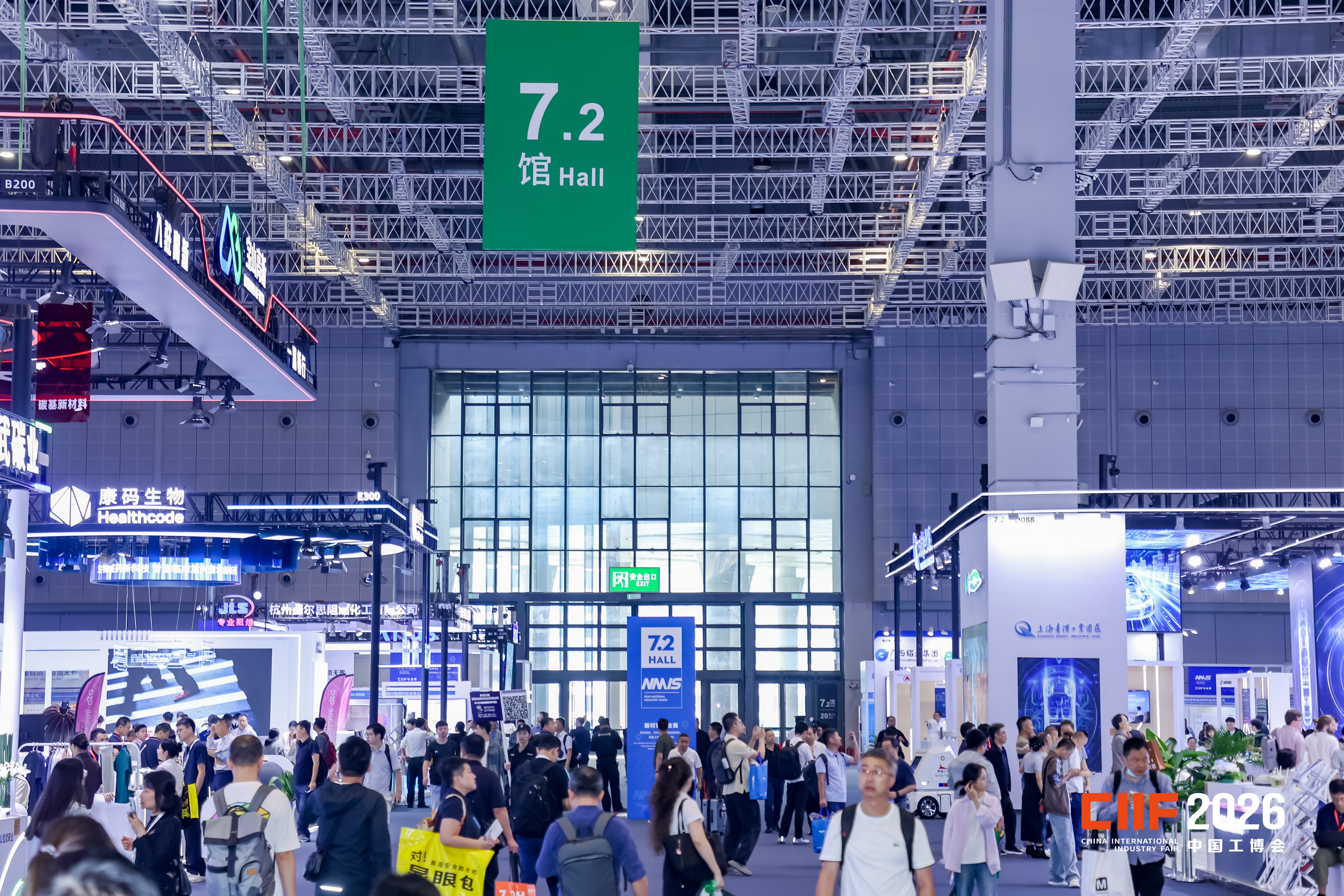
NMIS: connect material properties with the intended application
NMIS organises its coverage around materials and the industries that use them. Its documented application areas include new energy, transportation, low-altitude and commercial-space industries, advanced manufacturing, and life-health applications. For a product team, this creates a reason to connect a material discussion with the product’s intended environment and manufacturing process.
Suppose a team is exploring a lighter transportation component. The useful starting question is not simply which material is lightest. The team needs to consider the part’s function, manufacturing route, joining requirements and conditions of use. A material option that changes one of these may change the rest of the product decision. NMIS is relevant to investigating those material-and-application relationships; a show category alone does not establish that a particular material meets the project specification.
This makes NMIS relevant to both design and supplier-development colleagues. Design can explain the requirement, while manufacturing and sourcing teams can explore the implications for processing and supply. Their shared output is a clearer set of material options and questions for further testing.
An application-focused NMIS question is: which material option is worth investigating under our intended processing and use conditions? It gives a material specialist a defined problem to address and helps procurement understand why a nominally similar alternative may still need technical evaluation.
Clarify material form, supply and sample needs
An engineering requirement becomes more useful to a potential supplier when it includes the form in which the material will be used. A team may need material for its own processing operation, a prepared sample for evaluation or a component made to an agreed specification. These are different supply discussions. Identify which one the project needs before comparing proposals.
For the lighter-component example, ask what information accompanies the proposed grade and whether it describes the same processing route as the intended part. Manufacturing colleagues can identify the equipment or joining assumptions that need closer examination. Quality colleagues can explain which measurements would help determine whether the option deserves a trial. This keeps the discussion tied to the part and its production conditions.
Procurement can also establish what the supplier is able to provide at the current stage. Sample availability, the form of supply and the responsibilities for any trial are useful questions; they are not commitments implied by a theme-show description. An option that can be supplied for initial evaluation may still require further work before routine purchasing.
The practical output is a material shortlist with a reason for including each option and a clear next evaluation step. Record which product requirement each candidate might address, what evidence is available and which processing or use conditions remain to be checked. That gives the design, manufacturing and sourcing teams a shared basis for deciding whether to proceed.
When should a manufacturing team explore FTIS?
FTIS is a starting point for transportation product and manufacturing teams investigating the application their capabilities could serve. Its documented scope connects intelligent connected vehicles, the low-altitude economy, new energy, key components and future mobility ecosystems. The useful first question is what a transportation application requires from an industrial supplier.
A component manufacturer may understand its own process but need a clearer description of the part's role in a vehicle or another mobility product. Discussions can focus on the intended function, installation conditions, relationships with adjacent components and expectations for servicing. Defining those requirements helps the team decide which engineering and manufacturing colleagues should be involved in a follow-up.
For example, a supplier exploring an intelligent connected vehicle application could investigate whether the opportunity concerns a complete component, a manufacturing operation or support for product development. A manufacturer exploring low-altitude mobility could ask which operating conditions and application requirements apply to its proposed contribution. These are planning examples, rather than claims about a specific exhibitor or product.
The stage of the opportunity also matters. An early concept may call for a discussion of requirements that are still being defined. A prototype can prompt questions about what has been demonstrated and under which conditions. A potential supply requirement needs a clearer account of the item, its manufacturing scope and the evidence expected before acceptance. Establishing that stage helps procurement interpret what a technical discussion can realistically lead to.
FTIS is therefore relevant when the team needs to understand the transportation application, the supplier's intended role or the next development decision. A useful outcome could be an agreed list of application requirements or a more precise component enquiry. These examples do not imply that any particular vehicle, aircraft or system has been announced for CIIF 2027; participation and display details must be checked against that edition's official information.
Equipment, automation and industrial information
MWCS, IAS, RS and AIMS serve related production needs, but their names should not be treated as interchangeable. MWCS is the starting point when the central question is how a part is manufactured. IAS addresses automation products and system solutions around equipment and processes. RS provides the robotics focus when an application depends on a robotic task. AIMS brings industrial software, connectivity and information into the manufacturing discussion.
A production-engineering team can therefore choose its first theme by identifying the main source of uncertainty. If the process itself is undecided, start with MWCS. If the process is established but its operations need coordination, IAS may be more relevant. If the unresolved task is robotic, prioritise RS. If the question concerns the information needed to manage production, investigate AIMS. Related shows become useful when they answer a dependency that the initial discussion exposes.
For more detail on metalworking, our MWCS sourcing guide explains how machine-tool research connects with the surrounding production process; its event references describe their stated editions.
ICES within the wider industrial ecosystem
ICES adds the integrated-circuit ecosystem perspective within CIIF. Teams examining the relationship between electronics and industrial applications can use it to understand the broader industrial context. It complements the fair’s other themes without replacing the equipment, materials or application questions that determine a manufacturing project’s priorities.
Choose a starting point for your team
Before selecting shows, agree on the question that would make the visit useful. A job title alone is often too broad: an energy manager might be investigating a supply change or an operating problem, while a product-development manager might be comparing materials or clarifying a transportation component requirement.
For a factory energy team, a supply-and-demand question suggests ES first; equipment operation and retrofit needs suggest GLCS first. Add IAS or AIMS only if controls or production information are part of the question. This avoids turning an energy-focused visit into a general technology survey.
For an expansion project, the initial research objective could be to clarify the energy-system options and then identify equipment implications for the facilities and operations teams. If the issue is unexplained energy use in an existing plant, the priority could instead be to establish which operating conditions need closer investigation before considering a supply change.
For a product-development team comparing material options, NMIS can help organise questions about properties, processing and supply. A team investigating a transportation component can use FTIS to clarify the intended application and supplier role. Set a specific objective for each discussion, such as identifying the evidence needed for a material trial or defining the requirements behind a component enquiry.
A useful division of work is for application specialists to define the intended use and for manufacturing colleagues to identify processing and assembly constraints. Procurement can clarify the proposed scope of supply, while quality colleagues identify which results need closer examination. Each team then has a defined contribution to the next development decision.
For a production-engineering team, start with the process, automation, robotic task or information requirement that is least settled. Choose among MWCS, IAS, RS and AIMS accordingly. Where a production change affects energy use or material selection, ES, GLCS or NMIS can become relevant follow-up themes.
For instance, a proposed process change could make MWCS the initial focus, with IAS becoming relevant when the team needs to understand how the operation would fit into the line. If the main issue is already a defined robotic task, RS may come first. The aim is to identify which unresolved decision belongs with which technical discussion.
These combinations are ways to organise research, not fixed hall routes. Each additional show should help answer a question that matters to the project. A focused visit can be successful without covering every theme.
Planning for the 2027 fair
CIIF 2027 is scheduled for September 20–24, 2027, at the National Exhibition and Convention Center (Shanghai), China. The date and venue give teams a planning reference; the detailed arrangements for that edition determine the eventual visit programme.
Once the technical priorities are clear, use the edition-specific exhibitor information and hall plan to turn them into a visit plan. Theme descriptions help identify fields; exhibitor listings help identify organisations; individual participation announcements help establish which products and specialists will be available. A previous edition’s floor plan cannot establish next year’s locations.
Our official downloads centre is an entry point for exhibition materials. Check the year shown on each document when selecting resources for 2027. At this stage, the ten-show overview helps teams decide what to research, while the forthcoming edition’s own arrangements determine where and when those discussions can take place.
Frequently asked questions
Which CIIF theme shows should I explore for my manufacturing project?
Choose by the main decision: MWCS for metalworking processes, IAS for automation, RS for robotics, AIMS for industrial information and software, ES for energy systems, GLCS for equipment operation and low-carbon improvement, NMIS for materials and FTIS for transportation applications. STIS primarily features university research and technological achievements. ICES provides integrated-circuit ecosystem context. These distinctions draw on CIIF’s documented 2026 coverage; specific 2027 arrangements follow that edition’s materials.
How do ES and GLCS differ?
At CIIF, the Energy Show (ES) is a starting point for energy supply, storage and system coordination. The Green Low-Carbon Show (GLCS) focuses the discussion on industrial energy-using equipment, including operation, maintenance and retrofitting. A project spanning supply and equipment use may benefit from both. These distinctions reflect their documented 2026 scopes.
What should a materials team investigate at NMIS?
At the New Material Industry Show (NMIS), start with the product requirement and investigate candidate materials, the intended processing route and the conditions of use. Ask what form can be supplied, which measurements support the proposal and what a representative trial would need to establish. These are practical evaluation questions, not assurances about the suitability or availability of a particular material.
When and where is CIIF 2027 scheduled?
CIIF 2027 is scheduled for September 20–24, 2027, at the National Exhibition and Convention Center (Shanghai), China, as stated in the organiser’s closing announcement.